Evaluating the 3D Layered Owl SVG for Crafting Projects
When selecting digital assets for creative projects, particularly those involving layered paper crafts or vinyl cutting, the distinction between a standard flat design and a multi-dimensional vector file is significant. The 3D Layered Owl SVG represents a specific category of digital files designed to create depth and visual interest through stacking techniques. Unlike traditional single-layer cut files, this asset requires an understanding of layering principles to achieve its intended aesthetic. For crafters, small business owners, and DIY enthusiasts, choosing the right file format involves evaluating technical compatibility, design complexity, and end-use versatility.
This evaluation explores what makes the 3D Layered Owl SVG distinct from other digital downloads, compares it against alternative design approaches, and provides practical guidance on how to utilize these files effectively. Whether you are planning a classroom decoration, a personalized gift, or a commercial product line, understanding the nuances of layered vector art will help you make an informed decision about whether this specific resource fits your workflow.
Understanding the Structure of 3D Layered Designs
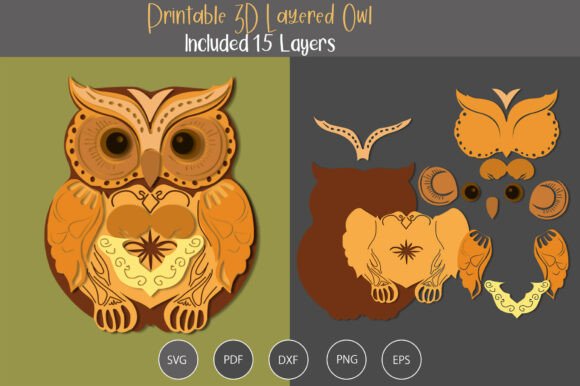
A standard SVG (Scalable Vector Graphics) file typically contains a single path or a group of paths that represent a two-dimensional image. When used with cutting machines like Cricut or Silhouette, these files produce flat shapes. In contrast, a 3D Layered Owl SVG is composed of multiple individual layers—often fifteen or more in detailed designs—that correspond to different parts of the owl’s anatomy or decorative elements. Each layer is scaled slightly differently to create an illusion of depth when stacked.
The "3D" aspect does not refer to volumetric modeling but rather to the parallax effect created by physical separation. By adhering each layer to the one below it using foam tape, glue dots, or double-sided adhesive, the final product gains dimensionality. This technique transforms a simple silhouette into a textured, tactile object. The file provided usually includes not just the SVG, but also companion formats such as DXF, PNG, EPS, and PDF to ensure compatibility across various software platforms, from Adobe Illustrator to free online editors.
File Format Versatility
One of the primary advantages of purchasing a comprehensive digital pack is the inclusion of multiple file types. While the SVG is the industry standard for cutting machines, having a high-resolution PNG is crucial for printing at home or sending to professional photo labs. The EPS and DXF formats support users who rely on vector editing software for customization. This multi-format approach ensures that the 3D Layered Owl SVG can be adapted to different production methods, whether you are cutting vinyl for a laptop sticker or printing on cardstock for a wall hanging.
Comparison with Alternative Design Styles
When researching digital craft assets, consumers often encounter several categories of designs. Comparing the 3D layered style to these alternatives helps clarify where this option fits best in terms of effort, cost, and visual impact.
- Flat Single-Layer SVGs: These are the most common and easiest to use. They require only one cut and no assembly. While efficient, they lack the visual pop and texture of layered designs. A flat owl design might work well for a simple decal, but it cannot replicate the intricate detail of a layered piece.
- Pre-Cut Kits: Some sellers offer physical kits with pre-cut foam and cardstock. While convenient, these limit material choice and color options. Digital files allow you to select any paper type, color, or finish available in your local store or online supplier.
- Complex Quilling or Origami Templates: These styles also create 3D effects but often require specialized skills in folding or rolling paper. Layered SVGs are generally more accessible to beginners because the cutting machine handles the precision work, leaving the user to focus on assembly.
The tradeoff here is time versus result. Flat designs are faster to produce but less visually striking. Complex manual techniques yield unique results but have a steep learning curve. The 3D Layered Owl SVG sits in the middle, offering a high-impact result that leverages technology to reduce manual dexterity requirements while still demanding attention to assembly order.
Evaluating Strengths and Limitations
Every design tool has strengths and limitations. Understanding these factors is essential for determining if the 3D Layered Owl SVG is the right choice for your specific project.
Strengths
The primary strength of layered digital files is their adaptability. You can change the color scheme entirely by simply swapping out the paper stock. A brown and white palette creates a realistic barn owl look, while a purple and teal palette transforms the same design into a whimsical, fantasy-themed decoration. This flexibility is difficult to achieve with pre-made physical products.
Additionally, the digital nature of the product means instant access. There is no shipping delay, and you can reprint or remake the project indefinitely without additional cost. The inclusion of fifteen layers allows for a high degree of detail, capturing features like feather textures, eye highlights, and beak contours that would be lost in a simpler cut file.
Limited Factors
The most significant limitation is the assembly time. Cutting a fifteen-layer design takes longer than a single-layer cut, and assembling them requires patience and precision. If the layers are not aligned correctly, the final image may appear skewed or distorted. Furthermore, larger layered designs can become heavy or bulky, which may limit their use as lightweight stickers or decals. They are better suited for framed art, bookends, or sturdy display pieces.
Another consideration is the skill level required for editing. While the file is ready-to-cut, many users wish to resize or modify colors before cutting. This requires familiarity with basic vector software. Users relying solely on the cutting machine’s interface may find adjusting complex layered files challenging compared to simpler, grouped shapes.
Best-Fit Situations and Use Cases
Determining when to use the 3D Layered Owl SVG depends on the desired outcome and the resources available. It is particularly well-suited for:
- Educational Decorations: Classrooms often feature animal themes. A layered owl adds a focal point to reading corners or science displays, engaging students with its dimensional quality.
- Personalized Gifts: Because the design is digital, you can customize the background colors to match a recipient’s favorite hues. A layered owl mounted on a dark wood slice or a painted frame makes for a sophisticated, handmade gift.
- Seasonal Crafts: Owls are associated with autumn and Halloween. A layered design in orange, black, and gold can serve as a centerpiece for fall tables or a festive door hanger.
- Small Business Inventory: For entrepreneurs selling handmade goods, layered art commands a higher price point than flat prints due to the perceived value of craftsmanship. However, this must be weighed against the increased labor time.
Conversely, if you need quick, mass-produced items for a busy market stall, the time investment of assembling fifteen layers per unit may not be profitable. In such cases, a flat SVG printed on high-quality vinyl or transferred onto wood might be a more efficient alternative.
Technical Considerations for Success
To get the most out of the 3D Layered Owl SVG, proper preparation is key. First, ensure your cutting machine’s blade is sharp. Dull blades can struggle with intricate details in smaller layers, leading to jagged edges that ruin the clean lines of the design.
Material selection also plays a critical role. Standard copy paper may be too thin to hold the structure of a large layered piece, causing it to sag. Cardstock between 80lb and 110lb is generally recommended for stability. For the backing, a sturdy base such as poster board, foam core, or even a wooden plaque provides the necessary support for the weight of multiple layers.
Adhesive choice matters for both durability and aesthetics. Foam tape is ideal for creating the 3D gap between layers, but it adds thickness. Glue dots provide a flatter bond but may not offer enough lift for a pronounced 3D effect. Experimenting with different adhesives on a test run can help determine the best balance for your specific vision.
Conclusion on Decision Making
The choice between a 3D Layered Owl SVG and other digital assets ultimately comes down to the balance between visual impact and production efficiency. If your goal is to create a statement piece that showcases detail and craftsmanship, the layered approach offers superior aesthetic rewards. The ability to customize colors and materials gives you full control over the final look, making it a versatile tool for various occasions.
However, if speed and simplicity are your priorities, a flat design or a pre-cut kit may serve you better. It is important to assess your available time, skill level with assembly, and the intended display method before committing to a complex layered file. By carefully weighing these factors, you can ensure that your investment in digital crafting resources yields results that meet your creative expectations.
For those willing to invest the extra time in assembly, the 3D Layered Owl SVG provides a rewarding challenge that results in a professional-grade decorative item. Its multi-format delivery ensures compatibility with most modern crafting workflows, making it a robust option for both hobbyists and professionals looking to add depth to their projects.